
Contents
Now this is welcome news! It's surprising to see the U.S. government finally announce a plan to retire the penny. The topic has been debated for a long time, but this is the first concrete movement and it carries real weight. The decision is expected to cut cash transaction costs and help the environment, reflecting the reality that penny use has been steadily declining. There will of course be arguments on both sides, but overall it's a positive move that fits the times.
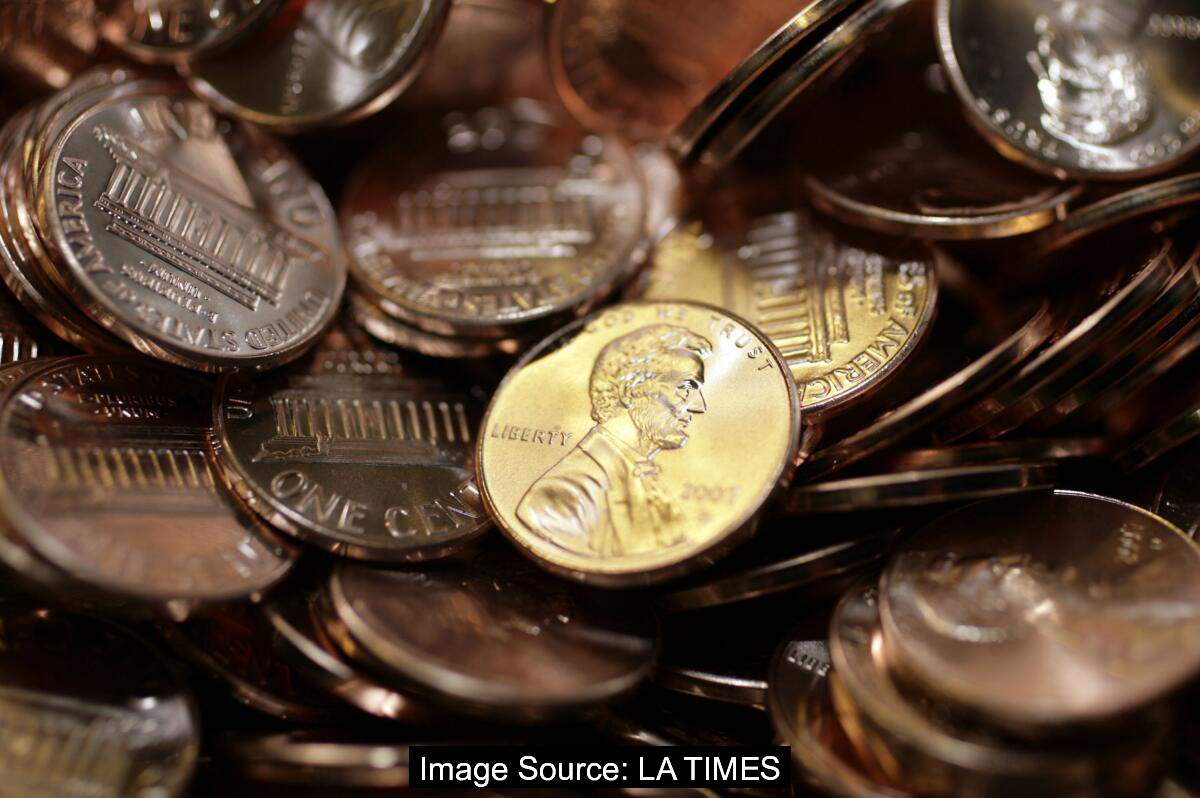
Estimated $56 Million in Annual Savings from Halting Penny Production
Trump Administration Decides to Stop Penny Production
According to U.S. Treasury officials,halting penny production is expected to save $56 million a year in materials. President Trump ordered the halt in February, citing that producing a single penny costs over two cents — deemed too wastefulis.
Background of the Decision
About 114 billion pennies currently circulate in the U.S., but actual usage is very low. The penny is one of the first coins minted at the U.S. Mint after its founding in 1792. However, with production costs rising to about 4 cents per penny, a halt has become unavoidable.
Debate Over Stopping Penny Production
Arguments to Eliminate the Penny
Those who want to eliminate the penny argue that production costs are excessive and practical use is low. Boston University professor Jay Zagorsky cautioned, “Even if penny production stops, demand for nickels could grow and end up causing larger losses.”
Arguments to Keep the Penny
Penny defenders, on the other hand, emphasize the penny's usefulness in charity drives and small-cash transactions. They also note that the cost to make a penny is relatively low compared to a nickel. Mark Weller, executive director of Americans for Common Cents, said, “Past congressional attempts to eliminate the penny have failed.”
Bills Introduced to End Penny Production
Congressional Bills to Eliminate the Penny
Following Trump's order, two bipartisan bills have been introduced this year. Senators Mike Lee (R) and Jeff Merkley (D) introduced the “Make Sense Not Cents Act”, and House members Lisa McClain (R) and Robert Garcia (D) along with Senators Cynthia Lummis (R) and Kirsten Gillibrand (D) introduced the “Common Cents Act”.
Hurdles to Passage
Professor Zagorsky pointed out that stopping penny production alone isn't enough. He said, “A bill that includes price-rounding measures needs to pass,” or demand for the more expensive nickel could rise instead.
Conclusion
Halting penny production carries significant fiscal benefits, but there's room for debate on practicality and convenience. We'll need to watch how this decision ultimately affects everyday life. The penny debate seems likely to continue, and Congress will need to weigh and decide carefully.
English Words Pulled from the Translation
How to use 'popular'
Korean meaning: popular
Example sentences:
– The new movie is very popular among young people. (The new movie is very popular with young people.)
– Kpop has become popular worldwide. (K-pop has become popular worldwide.)
Detailed explanation: ‘Popular’ means something that's well-liked or preferred by many people. It can be used for people, things, activities, and more.
Examples of 'Gillibrand'
Korean meaning: Gillibrand (example use)
Example sentences:
– Gillibrand has been a strong advocate for women’s rights in the Senate. (Senator Gillibrand has been a strong advocate for women's rights.)
– Gillibrand’s proposal to reform military sexual assault policies received bipartisan support. (Gillibrand's proposal to reform military sexual assault policies received bipartisan support.)
Detailed explanation: Gillibrand is a U.S. Democratic senator known for her work on women's rights and tackling military sexual assault.
Mark
Korean meaning: to mark, to record
Example sentences:
– The teacher marked the student’s homework. (The teacher marked the student's homework.)
– The team marked their 10th win of the season. (The team recorded their 10th win of the season.)
Detailed explanation: 'Mark' means to make a mark on something or to record it — like marking up homework or noting a game's result.
'Conducts' in idioms
Korean meaning: to behave, to conduct oneself
Example sentences:
– She conducts herself with grace and poise at all times. (She always carries herself with grace and poise.)
– The manager conducted the meeting in a professional manner. (The manager ran the meeting professionally.)
Detailed explanation: 'Conduct' means to act or carry oneself appropriately and well in a given situation — used at work, in meetings, and in formal settings.
Memorize 'cite'!
Korean meaning: to cite, to refer to
Example sentences:
– The researcher cited several studies to support her argument. (The researcher cited several studies to support her argument.)
– The speaker cited the importance of environmental protection in her speech. (The speaker cited the importance of environmental protection in her speech.)
Detailed explanation: 'Cite' means to reference or mention someone else's words or work — useful when supporting your argument in a paper or speech.
Keep at it and your English will get better — you've got this!

 한국어
한국어  English
  日本語
日本語  繁體中文
繁體中文  ไทย
ไทย  Tiếng Việt