
Contents
Hello, everyone! Today I've got a really fascinating topic for you. Let's take a look at the theme park showdown unfolding in Florida between Universal and Disney. These two giants are fighting fiercely to win over tourists. Universal is challenging Disney's longtime dominance with bold new attractions, while Disney is leaning on its brand power to stay on top. The fierce face-off between these two will shape the future of Florida's theme park industry, while giving tourists more options than ever. Who will end up in the winner's circle? We'll have to wait and see.
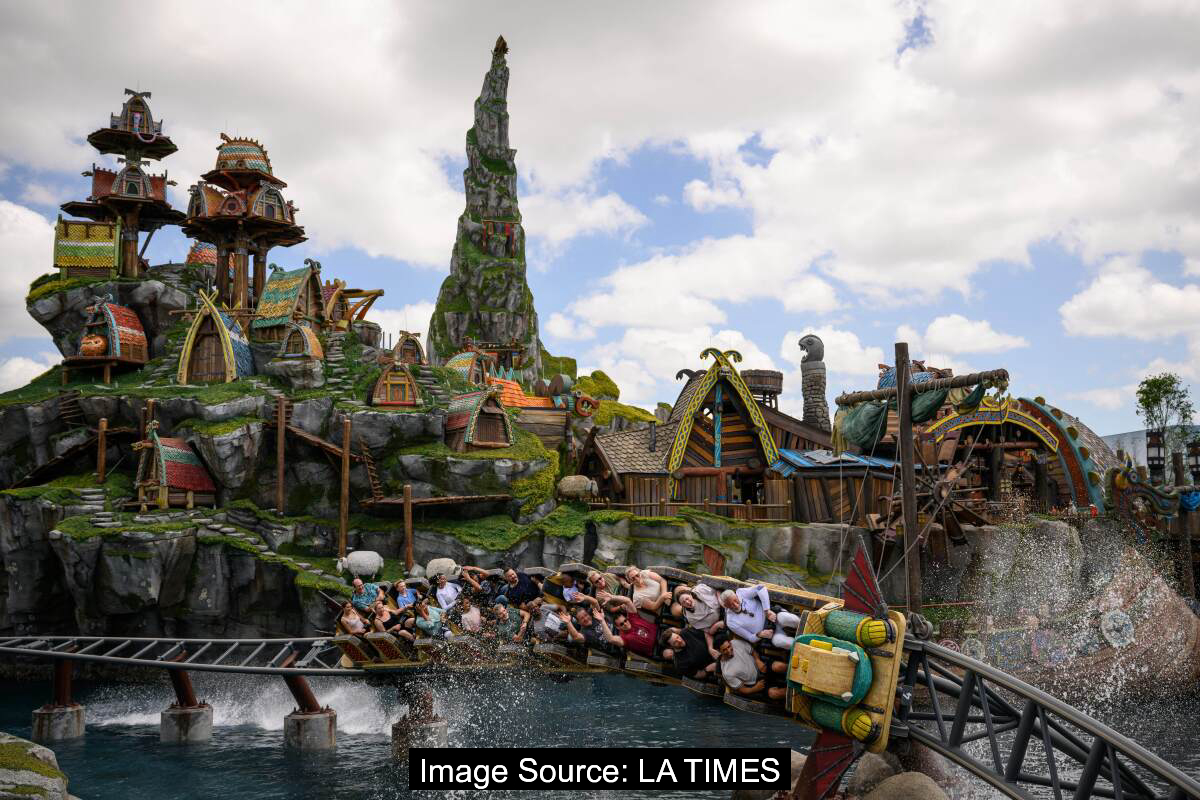
Theme park rivalry heats up in Orlando
Universal opens Epic Universe, its newest theme park
Universalthis week opened Epic Universe, a new $7.5 billion theme park. This is Comcast-owned company'slatest move to expand its tourism and entertainment empire. The opening puts pressure on Walt Disney World Resort,which has long dominated the Orlando tourism market.
What sets Epic Universe apart
Located within a 750-acre development, Epic Universe is Universal's biggest theme park expansion since the Wizarding World of Harry Potter opened 15 years ago. The park features five themed lands, four of which are tied to well-known franchises: “Harry Potter,” “How to Train Your Dragon,” Universal's classic movie monsters in “Dark Universe,” and Nintendo gaming properties. There's also a space-themed Celestial Park at the center.
Universal vs. Disney–a fierce battle
A history of Disney World
Disney got into the Orlando market first, opening Magic Kingdom in 1971. Universal didn't open its own Orlando park until 1990–giving Disney nearly a 20-year head start. Disney went on to add Epcot and Disney-MGM Studios theme park.
Universal closes the gap
But the theme park rivalry took a new turn in 2010 when Universal opened Harry Potter Land in Orlando. Lands built around specific intellectual property were innovative at the time, and the format later showed up in Disney parks too.
What's next
Growing through fierce competition
Dennis Speigel, president of consulting firm International Theme Park Services, said, “Universal's progress in the Orlando market over the past 15 years has been impressive, and they've significantly closed the gap with Disney.” He added that “the rivalry between these two has now become a fierce 'title fight.'”
Going all in to attract tourists
All in all, Orlando's theme park industry is growing through intense competition. Both companies are expected to keep rolling out new attractions and facilities as they fight to attract tourists.
English Words Pulled from the Translation
How to use "includes"
Korean meaning: 포함하다 (pohamhada) – to include
Example sentences:
– The package includes a free gift. – This package comes with a free gift.
– This book includes many useful tips. – This book contains many useful tips.
The word “includes” is used to indicate that something is part of a larger whole. It is used to list the contents or components that are part of a particular item or set.
Examples of using "which"
Korean meaning: 어느 것, 어떤 (eoneu geot, eotteon) – which
Example sentences:
– Which book do you want to read? – Which book would you like to read?
– I don’t know which one to choose. – I'm not sure which one to pick.
The word “which” is used to ask about or refer to a specific person, thing, or option from a group. It is used to inquire about or identify a particular item or choice.
nature
Korean meaning: 자연 (jayeon) – nature
Example sentences:
– I love spending time in nature. – I love spending time outdoors in nature.
– The beauty of nature is truly amazing. – The beauty of nature is truly breathtaking.
The word “nature” refers to the physical world, including plants, animals, the landscape, and other features and products of the earth, as opposed to the products of human civilization and activity.
"2025" in idioms
Korean meaning: 숙어, 2025년 (sugeo, icheon-isib-onyeon) – idiom, the year 2025
Example sentences:
– That expression is a common idiom in English. – That phrase is a common English idiom.
– By the year 2025, we hope to achieve our goals. – We're aiming to reach our goals by 2025.
An idiom is a commonly used expression in a language that has a meaning different from the literal meaning of the individual words. The year 2025 refers to a specific future date.
Let's memorize "economic"!
Korean meaning: 경제의, 외우다 (gyeongjeui, oeuda) – economic, to memorize
Example sentences:
– The economic situation is improving. – The economy is on the upswing.
– Let’s try to memorize these new vocabulary words. – Let's try to memorize these new vocab words.
The word “economic” refers to the production, distribution, and consumption of goods and services, as well as the theory and management of economies or financial systems. “Memorize” means to commit something to memory by learning it thoroughly.
Keep at it and your English will keep getting better — you've got this!

 한국어
한국어  English
  日本語
日本語  繁體中文
繁體中文  ไทย
ไทย  Tiếng Việt